The End of an Era: Unpacking the Leitmayr Alter in German Television History
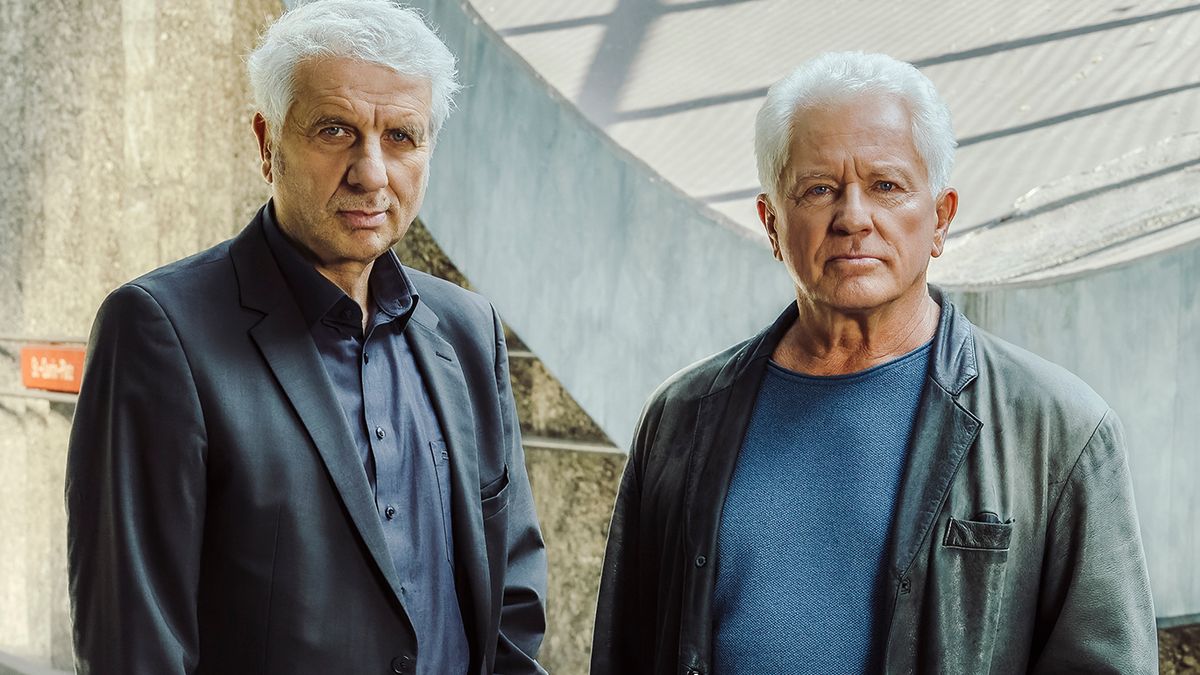
The landscape of German crime drama recently witnessed a significant turning point with the departure of two of its most iconic figures: Chief Inspectors Ivo Batic, portrayed by Miroslav Nemec, and Franz Leitmayr, brought to life by Udo Wachtveitl. After an astonishing 32-year tenure and a remarkable 100 cases, the Munich duo bid their final "Servus" to millions of viewers. This farewell marks not just the end of a long-running series arc, but the close of what many affectionately refer to as the "Leitmayr Alter" – an era defined by a unique blend of Bavarian charm, gritty realism, and unwavering public appeal.
From their debut on January 1, 1991, in the very first Munich "Tatort" installment, Batic and Leitmayr quickly became cultural touchstones. Their longevity in the demanding world of television is a testament to the actors' talent, the writers' consistency, and the deep connection they forged with their audience. The concept of "Alter" in German, meaning both 'age' and 'era', perfectly encapsulates the journey of Franz Leitmayr: from a younger, less jaded detective in a D-Mark Germany, driving an old Porsche, to the grizzled, wise investigator navigating a modern, unified Europe. This article delves into the fascinating evolution of this beloved character and the lasting legacy of the "Leitmayr Alter" in German television. For more insights into the character's journey, you might want to read
Leitmayr Alter - Article 1.
From "Animals" to "Unvergänglich": A Journey Through Time and Transformation
The journey of Chief Inspectors Batic and Leitmayr began over three decades ago with the case "Animals," which first aired on January 1, 1991. This inaugural episode, watched by an impressive 8.7 million people, introduced a raw, unrefined version of the duo. Early reviews, like those from the *Süddeutsche Zeitung* retrospectively in 2011, weren't always glowing, describing the story as "somewhat confused and cliché-ridden" and the police force as "sympathetic dilettantes." Even Udo Wachtveitl himself admitted that their initial outing felt "a bit off," suggesting that the pair truly "found themselves" by their third "Tatort" case, "Die chinesische Methode."
In "Animals," the detectives were visibly younger, before the touch of grey had fully settled into their hair. The world they inhabited was different too: Germany was still operating on D-Mark, and Leitmayr's character was notable for driving an old Porsche, a detail that now serves as a nostalgic marker of a bygone era. Their first investigation immersed them in the murky world surrounding the cosmetics firm Pelzer, where the death of animal rights activist Angelika Weiss, who had previously tried to report the company for illegal animal testing, became their perplexing puzzle. While the company owner, Walter Pelzer, admitted to knowing Angelika, he denied any knowledge of the accusations or her death. The case also featured Michael Fitz as the photographer Fred Grimm, a friend of the deceased. Fitz would later return in a different, long-standing role as Carlo Menzinger, Batic and Leitmayr's steadfast assistant until 2007, a testament to the early foundations of their world-building.
The evolution from these early, somewhat tentative steps to the confident, deeply etched characters viewers came to adore is a key aspect of the "Leitmayr Alter." It wasn't just the actors aging, but the characters maturing, their partnership deepening, and their understanding of Munich's underbelly becoming more nuanced. This gradual, organic development is a rare feat in television, allowing audiences to grow alongside their heroes and witness the subtle shifts in their personalities, their methods, and even their worldview, as the social and political landscape of Germany transformed around them.
The Enduring Appeal of Leitmayr and Batic
What made the "Leitmayr Alter" so exceptionally long-lived and beloved? Beyond the sheer consistency of the actors and the frequent output of new cases, several factors contributed to their enduring appeal. First and foremost was the undeniable chemistry between Udo Wachtveitl as Franz Leitmayr and Miroslav Nemec as Ivo Batic. Their dynamic was a masterclass in contrasting personalities: Leitmayr, the more intellectual, often melancholic and wry observer; Batic, the more impulsive, street-smart, and emotionally driven counterpart. This interplay provided a rich tapestry for both dramatic tension and moments of genuine humor and camaraderie.
Their setting in Munich also played a crucial role. Unlike some "Tatort" iterations that focused on specific regional quirks, Batic and Leitmayr's Munich was presented as a cosmopolitan yet grounded city, allowing for a wide range of social issues and criminal narratives. The backdrop shifted over the decades, reflecting real-world changes from the economic boom to evolving societal norms and technological advancements. The audience witnessed their city, and implicitly their nation, mature and change, making the characters relatable and their stories resonant.
Moreover, their longevity allowed for a unique depth of character development that is rare in procedural dramas. Viewers saw Leitmayr and Batic grapple with personal struggles, ethical dilemmas, and the cumulative toll of decades spent confronting humanity's darker side. This made them more than just detectives; they became familiar, almost familial figures, whose personal journeys were as compelling as the mysteries they solved. This kind of deep connection is what truly defines the "Leitmayr Alter" as a significant cultural phenomenon.
It's also worth noting that while 100 cases is a monumental achievement, they are not the longest-serving "Tatort" investigators. That distinction belongs to Ludwigshafen's Kriminaloberkommissarin Lena Odenthal (Ulrike Folkerts), who has been on screen since 1989. However, the Batic and Leitmayr duo hold the record for the most cases as a *pair*, underscoring the strength and consistency of their partnership. The ability of the "Leitmayr Alter" to maintain a fresh perspective and engaging storytelling over such an extended period is a testament to the entire production team. For a deeper dive into their partnership and memorable cases, check out
Leitmayr Alter - Article 2.
A Farewell with Record Viewership: The Legacy of Leitmayr Alter
The culmination of the "Leitmayr Alter" came with the two-part farewell special, "Unvergänglich" (Part 1 airing on Sunday, April 5, and Part 2 on Monday, April 6). This emotional conclusion resonated deeply with audiences, translating into extraordinary viewership numbers that cemented their legendary status. The second part of their Munich "Tatort" finale shattered expectations, drawing an average of 6.86 million viewers aged three and up. This was an increase of 0.26 million viewers from the first part, demonstrating an escalating emotional investment from the public as the final moments approached.
The broadcast commanded an impressive 27.8 percent market share in the overall viewing audience, firmly positioning it as the top-watched program on Easter Monday. Even among the younger demographic (14 to 49 years), the farewell achieved a significant boost, attracting 890,000 linear viewers and a formidable 20.8 percent market share. These figures are not just statistics; they are a clear indicator of the profound impact Leitmayr and Batic had on the German public consciousness. The farewell was not merely a TV event; it was a communal experience, a shared moment of saying goodbye to characters who had been a consistent presence in countless households for over three decades.
Further highlighting their immense popularity, a documentary dedicated to the legendary Munich "Tatort" team, which followed the final episode, also garnered substantial attention. It attracted 3.32 million viewers and achieved a 16.2 percent market share, including a solid ten percent in the crucial 14-49 age group. These numbers underscore that the fascination extended beyond the fictional cases to the real people and the legacy behind the "Leitmayr Alter." The high ratings for their farewell are a powerful testament to the enduring bond between the characters, the actors, and their devoted audience, signaling the monumental cultural footprint they leave behind.
Conclusion: Beyond the Age, an Enduring Era
The "Leitmayr Alter" truly represents more than just the passing years of a fictional detective; it embodies an era of television that captured the hearts and minds of a nation for over three decades. Franz Leitmayr, alongside Ivo Batic, evolved from "sympathetic dilettantes" to seasoned, beloved investigators, reflecting societal changes and personal growth in equal measure. Their 100 cases and remarkable longevity are a testament to the power of compelling storytelling, strong character development, and the unique alchemy between two talented actors. As the curtain falls on their "Tatort" chapter, the immense viewership for their farewell episodes solidifies their status as television legends. The "Leitmayr Alter" may have concluded its run, but its impact on German television history and the fond memories it created for millions of viewers will undoubtedly remain "unvergänglich" – unforgettable.